Radiant Heating Systems: Benefits, Types, and Installation Guide
Winter mornings shouldn’t start with a cold floor and an icy shiver. If you’re searching for a heating solution that feels like a warm sunrise under your feet, radiant heating might be just the comfort upgrade you need.
At Mavi HVAC, we help both homeowners and businesses find the right balance of comfort, efficiency, and reliable performance. If you’ve ever wondered about radiant heating systems—how they work, why they’re different, and whether they fit your property—this guide is for you.
How Radiant Heating Works 🌡️
Picture the warmth from a sunbeam on your skin. That’s radiant heat—energy that travels directly to people and objects, not just the air. In a radiant heating system, heat is delivered under your feet, in your walls, or even above you, creating a cozy, even warmth.
Instead of blasting air through vents (like forced air systems), radiant systems use hot water pipes, electric mats, or panels to warm the surfaces in a room. The result? No cold spots, no whoosh of dusty air—just gentle, consistent heat.
Key Benefits:
- Even temperatures, room to room
- Reduced allergens (no blowing dust or particles)
- Quiet operation—no rattling vents
- Lower energy use if properly designed
When you walk on a floor with radiant heat, it’s like stepping onto a sun-warmed sidewalk on a spring afternoon. That comfort is hard to match.
Types of Radiant Systems
Radiant heating isn’t one-size-fits-all. Here’s a look at the most popular systems for homes and businesses:
Hydronic Radiant Floors
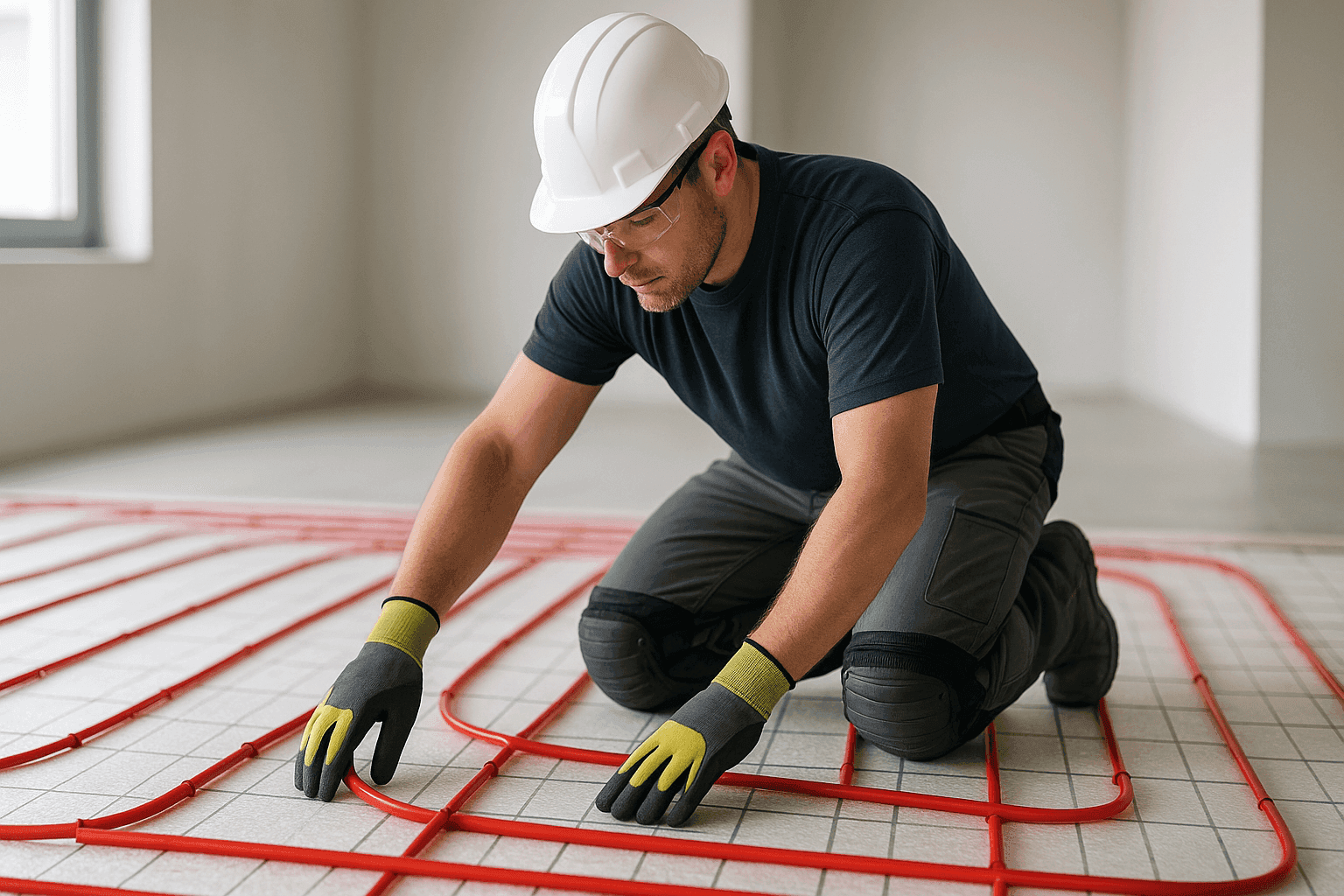
The classic choice. Tubing is installed beneath your flooring (tile, hardwood, or even concrete) and filled with warm water from a boiler. These systems are known for efficiency and are often used in new construction or major remodels. They can also be zoned—giving you precise temperature control in different areas.
Electric Radiant Floors
Think of thin electric mats or cables installed under floors. These are easier to retrofit in existing spaces—like bathrooms or kitchens. They heat up quickly and are great for spot comfort, but can cost more to operate than hydronic systems over large areas.
Radiant Panels
Mounted on walls or ceilings, radiant panels use electricity to provide fast, focused heat. They’re ideal for rooms that need an extra boost—like a chilly basement office.
Underfloor vs. Wall/Ceiling Systems
Most radiant systems are installed under floors, but wall and ceiling panels are growing in popularity, especially in commercial spaces or where floor access is limited.
Radiant Heating vs. Forced Air: Which Is Better?
Radiant and forced air systems each have strengths—like comparing a gentle fireplace to a powerful fan heater.
Radiant heating:
- Delivers warmth directly to objects and people
- Eliminates drafts and airborne allergens
- Works silently
- Maintains consistent temperatures—no cycling hot/cold
Forced air:
- Heats quickly, good for rapid temperature changes
- Can double as air conditioning in summer
- Circulates air for ventilation, filtration, and humidity control
For those with allergies or sensitivities, radiant heating’s lack of moving air can greatly improve indoor air quality. It’s also more energy-efficient in many cases, especially when paired with modern thermostats and insulation.
Installation Considerations
Choosing radiant heating is more than picking a system—it’s about matching your building, budget, and goals.
What to ask yourself:
- Is this a new build, or are you retrofitting an existing space?
- What type of flooring do you have?
- Do you want radiant heat in every room, or just select areas?
Professional installation is critical. Building codes (like those from the International Code Council and the National Fire Protection Association) require the right materials, spacing, and controls to ensure safety and performance.
Timeline:
- New builds: radiant heating is easiest to install before flooring goes in.
- Retrofits: electric mats or panels can often be added during renovations, but may require lifting flooring or opening walls. Plan for a few days to a week, depending on the size and complexity.
Tip: Always use a licensed HVAC contractor. Proper installation protects your investment, avoids future repairs, and can improve long-term energy efficiency.
For more details, see our heating installation page.
Practical Tips for a Smooth Installation
- Plan early: Radiant systems are best installed before flooring is finished.
- Choose compatible flooring: Tile and stone transfer heat best; carpet insulates, which can reduce efficiency.
- Consider zones: Zoning allows different rooms to be set at different temperatures, saving energy.
- Don’t skimp on insulation: Proper insulation below the radiant system keeps heat where you want it.
- Integrate smart controls: Modern thermostats can optimize comfort and savings.
Maintenance & Longevity
Radiant heating systems are famously low-maintenance, especially hydronic systems. But like any HVAC solution, occasional checkups are wise.
- Annual inspections: Check for leaks, system pressure, and controls.
- Flush hydronic systems: Prevent mineral buildup.
- Monitor electric mats: Ensure circuits and sensors are working.
For ongoing care, visit our heating maintenance service page.
Costs & Time Factors
Radiant heating can be an investment upfront, but it pays off over time with lower energy bills and fewer repairs.
Cost drivers:
- System size and type (hydronic is more expensive to install, cheaper to run; electric is the opposite)
- New construction vs. retrofit
- Flooring materials
- Zoning complexity
Typical installation time:
- Small rooms: 1–2 days
- Whole house or large commercial: 1–2 weeks
Long-term savings:
Well-designed radiant systems can cut heating bills by up to 30%, according to the U.S. Department of Energy.
Is Radiant Heating Right for Your Property?
Radiant heating shines in spaces where comfort, quiet, and air quality matter. It’s ideal for:
- Homes with open floor plans
- Bathrooms and kitchens
- Basements and lower levels
- Allergy-sensitive environments
- Commercial offices and studios
If you value steady warmth, minimal maintenance, and a healthier indoor environment, radiant heating deserves a close look.
FAQ
Does radiant heating work under carpet?
Yes, but it’s less efficient than tile or wood. Special low-pile carpet and padding are recommended.
Can radiant systems heat an entire house?
Absolutely. Hydronic systems especially are designed for whole-home heating.
How long do radiant systems last?
Hydronic tubing can last 20–35 years or more. Electric mats often last over 20 years with proper care.
Is radiant heating safe?
Yes, when installed by licensed professionals following code requirements. No exposed flames or hot surfaces.
Local & Seasonal Considerations
Radiant systems perform best in well-insulated buildings. In colder climates, they can handle even the harshest winters, especially with backup systems like mini-splits or traditional furnaces.
If humidity is an issue, pair radiant heating with dehumidifiers near you for optimal comfort and air quality.
Warm floors. Quiet nights. Cleaner air. Radiant heating checks all the boxes for lasting comfort. Ready to see if it’s right for your home or business?
Call Mavi HVAC now — or reach us anytime at 844-448-3453 .